September 28, 2026 Post by : Editorial Port History
Reading the Water: How Harbor Pilots Knew the Bottom Without Seeing It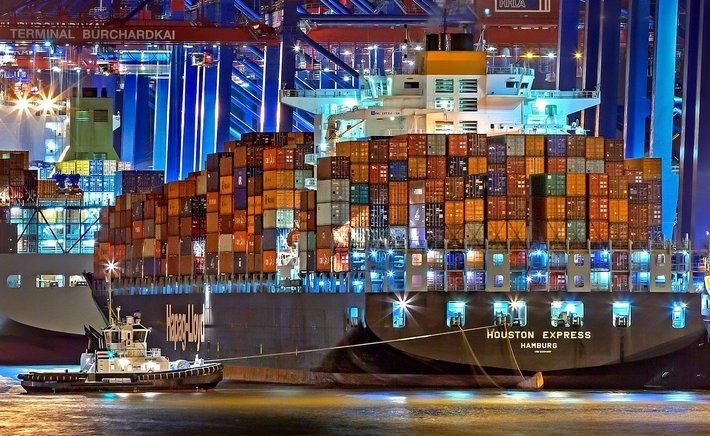
For most of maritime history, cargo moved the way it always had: in sacks, barrels, crates, bales, and drums, carried on the backs of men called longshoremen. A ship might spend a week in port while gangs of workers unloaded it piece by piece, and another week loading outbound cargo. The waterfront was a place of constant noise and motion, crowded with carts, horses, and later trucks, all waiting on the slow rhythm of human hands. Then came the box, and in a few decades, most of that world simply disappeared.
The idea was not new. People had been putting goods in standardized containers for centuries, and railroads had used small containers since the nineteenth century. What changed in the 1950s was the decision to standardize the box itself and to build ships, cranes, and terminals around it. Once a crane could lift a forty-foot steel container off a truck chassis and onto a ship in under two minutes, the economics of port labor were turned upside down. A job that once took a gang of twenty men an hour could now be done by one crane operator in a fraction of the time.
The Human Cost
The transformation was brutal for the workers who had built their lives around the old system. Longshore work had always been casual and uncertain, with men gathering at the shape-up each morning to compete for a day's pay. But it was also a livelihood, often passed down through families, with its own skills, hierarchies, and pride. Containerization wiped out most of those jobs within a generation. Ports that adapted built vast new terminals on deep water with rail connections; ports that did not were left with empty piers and silent warehouses.
Unions fought hard, and in some places they won important concessions: guaranteed annual income, early retirement, retraining, and jurisdiction over the new container work. In others, the transition was far more painful. Whole neighborhoods that had grown up around the docks, with their boarding houses, bars, chandleries, and churches, lost their economic reason to exist. The waterfront moved away from the city, and the city turned its back on the water.
The New Waterfront
What replaced the old docks was often something strange and clean. Container terminals are vast, flat, and quiet, patrolled by machines and fenced off from the public. They do not welcome visitors, and they do not need many workers. At the same time, the abandoned piers and warehouses of the old ports became prime real estate. Cities rediscovered their waterfronts as places to live, eat, and stroll, turning cargo sheds into markets and wharves into promenades.
There is a strange symmetry in this. The same water that once carried the world's goods now carries tourists and joggers, and the cranes that remain are more likely to be preserved as monuments than used for work. The container ship, meanwhile, has grown so large that it can no longer enter many of the harbors it helped to kill. It anchors offshore, waiting for a berth at a terminal that looks nothing like a harbor and everything like a parking lot. The old docks are gone, but the sea still decides where the money lands.


Author

22 feb,2025
This incident opened my eyes to the value of Insurance in general, so I decided to examine my personal and business insurance.


Comment (3)
The payments are made directly from one person to another without passing through a central bank or clearing house.
22 feb,2025
ReplyThe Lost Art of the Harbor Shanty: How Work Songs Built the Docks
23 feb,2025
ReplyLighthouse Keepers: The Loneliest Job on the Coast
23 feb,2025
Reply