September 16, 2026 Post by : Editorial Docks and Infrastructure
The Ship's Bell: A Voice That Outlived the Ship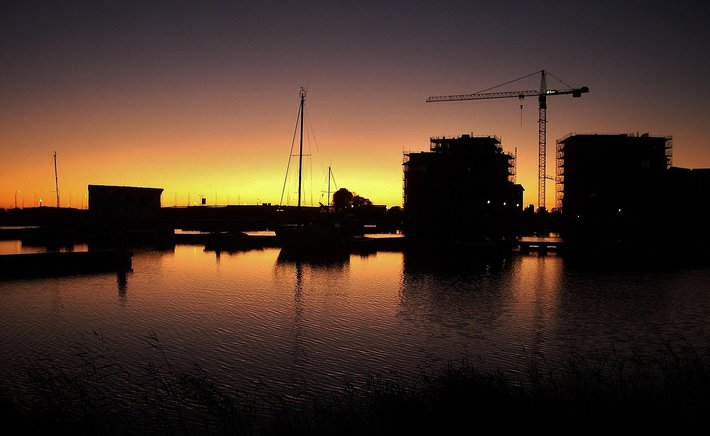
For most of maritime history, cargo moved on human backs. A ship's crew, sometimes helped by gangs of dockworkers, hauled sacks, barrels, and crates up and down gangplanks by hand. It was slow, dangerous, and limited the size of any single load. Then came the crane, and the waterfront changed forever.
Early harbor cranes were simple wooden jibs, often mounted on a stone base at the edge of a quay. A rope ran through a pulley at the tip of the jib, and a crew of men — or later a horse walking in a circle — provided the power. These machines could lift a few hundred pounds at a time, enough to swing a barrel or a crate from hold to dock. They were slow, but they multiplied what a gang could move in a day.
By the nineteenth century, iron and steam changed everything. Steam-powered cranes appeared on docks in major ports, their boilers hissing and their gears groaning as they swung heavy loads. Hydraulic cranes, driven by pressurized water from a central pumping station, became common in some harbors. They were quieter and smoother than steam, and cities like London and Hull built elaborate hydraulic networks to power them. A single crane could now lift several tons, and the pace of cargo handling accelerated.
The Gantry and the Container
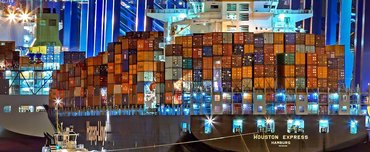
The twentieth century brought the gantry crane, a towering structure that straddled the ship or the dock. Gantry cranes could lift enormous weights and travel along rails, serving an entire berth. They became the defining silhouette of the modern port. But the real revolution came with containerization. Once cargo was packed into standardized steel boxes, cranes no longer needed to handle odd-shaped goods. They could lift a container in one clean motion, stack it on a truck or train, and move on. The gantry crane became the heart of the container terminal, and the old breakbulk docks faded.
This shift had a human cost. The gangs of dockworkers who once handled cargo piece by piece dwindled. The skills of the hold — knowing how to stow a mixed cargo, how to rig a sling, how to work safely in the dark between decks — became less relevant. The crane operator, seated high in a glass cab, replaced the men below.
Cranes as Landmarks
Today, old harbor cranes are often preserved as monuments. Some stand rusting on abandoned quays; others have been restored as museums or public art. They remind us that the waterfront was once a place of muscle, steam, and rope, not just containers and computers. The iron mule, as some called the dock crane, carried the trade of the world on its hook. It still does, though the hook is now guided by joysticks and satellites. The next time you see a crane against the sky, remember: it is not just a machine. It is the reason your shoes, your phone, and your coffee arrived on time.


Author

22 feb,2025
This incident opened my eyes to the value of Insurance in general, so I decided to examine my personal and business insurance.




Comment (3)
The payments are made directly from one person to another without passing through a central bank or clearing house.
22 feb,2025
ReplyLighthouse Keepers: The Loneliest Job on the Coast
23 feb,2025
ReplyContainerization and the Death of the Old Docks
23 feb,2025
Reply