September 25, 2026 Post by : Editorial Harbor Operations
The Iron Mule: How Harbor Cranes Remade the Working Waterfront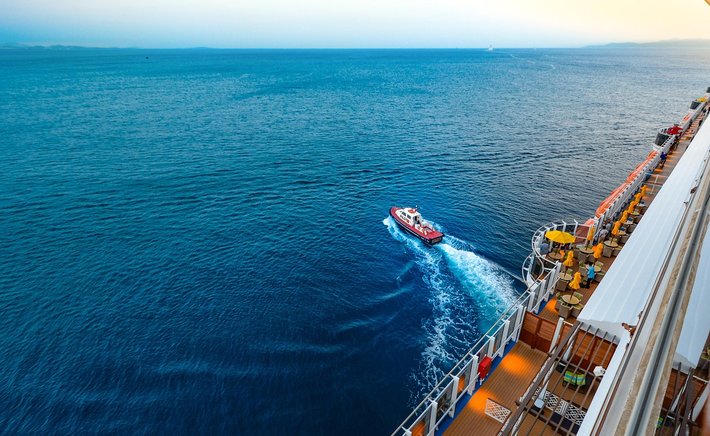
Watch a large ship approach a harbor and you will see a small boat running alongside it, matching its speed, waiting for a moment when the two hulls are close enough for a man to step across. That man is a harbor pilot, a local expert who takes control of the ship for the final miles into port. The boat that delivers him is a pilot boat, and the job of getting him aboard is one of the most demanding routines in all of maritime work.
Pilots exist because local knowledge cannot be replaced by charts and GPS. Every harbor has its own currents, shoals, bridge clearances, and traffic patterns, and those details change with the tide and the season. A pilot who has worked a port for twenty years knows where the channel has silted up since the last survey and which berth has a tricky approach in a crosswind. The law in most countries requires large vessels to take a pilot before entering or leaving port, and the pilot's authority on the bridge is absolute for the duration of the passage.
The Boarding
Getting the pilot onto the ship is the hard part. A pilot boat is typically fast, seaworthy, and built to maneuver in close quarters. It approaches the moving ship from astern or alongside, matching speed, and the pilot steps onto a rope ladder or a small platform lowered over the side. In calm weather this is merely difficult. In rough weather it is genuinely dangerous. Pilots have been crushed between hulls, swept off ladders, and lost overboard in the dark. The work has one of the higher fatality rates in the maritime industry, and the men and women who do it tend to be fatalistic about the risk.
Once aboard, the pilot takes the conn and begins issuing orders to the ship's officers. The captain remains responsible for the vessel, but in practice the pilot runs the approach, calling for rudder angles, engine speeds, and tug assistance. The dialogue between pilot and captain is a careful dance of authority and courtesy. A pilot who barks orders at a proud master can create friction; a pilot who defers too much can miss a critical moment. The best pilots are calm, clear, and decisive, and they know exactly how much to explain and how much to simply do.
The Pilot Boat and Its Crew
Pilot boats are small, usually under seventy feet, with a crew of two or three plus the pilot. They run in all weather and often operate around the clock. Their hulls are heavily fendered, their decks are designed for safe footing, and their engines are powerful enough to keep pace with ships that may be moving at ten or twelve knots. The boat's crew must judge the approach precisely: too far off and the pilot cannot board, too close and the boat risks being sucked against the ship's side.
Over the years, pilot boats have grown more capable, with better radar, self-righting designs, and safer boarding platforms. Helicopter transfer is used in some ports, but the boat remains the standard. Watching a pilot boat work a big ship in a stiff breeze is a reminder that the harbor is not a safe place. It is a place where people do difficult things well, every day, often in the dark, and where the smooth arrival of a ship depends on a small boat and a steady pair of legs.

Author

22 feb,2025
This incident opened my eyes to the value of Insurance in general, so I decided to examine my personal and business insurance.



Comment (3)
The payments are made directly from one person to another without passing through a central bank or clearing house.
22 feb,2025
ReplyTattoos, Superstition, and the Sailor's Fear of the Sea
23 feb,2025
ReplyReading the Water: How Harbor Pilots Knew the Bottom Without Seeing It
23 feb,2025
Reply